 Matthew Firth · Nov 8, 2026 · 7 min read
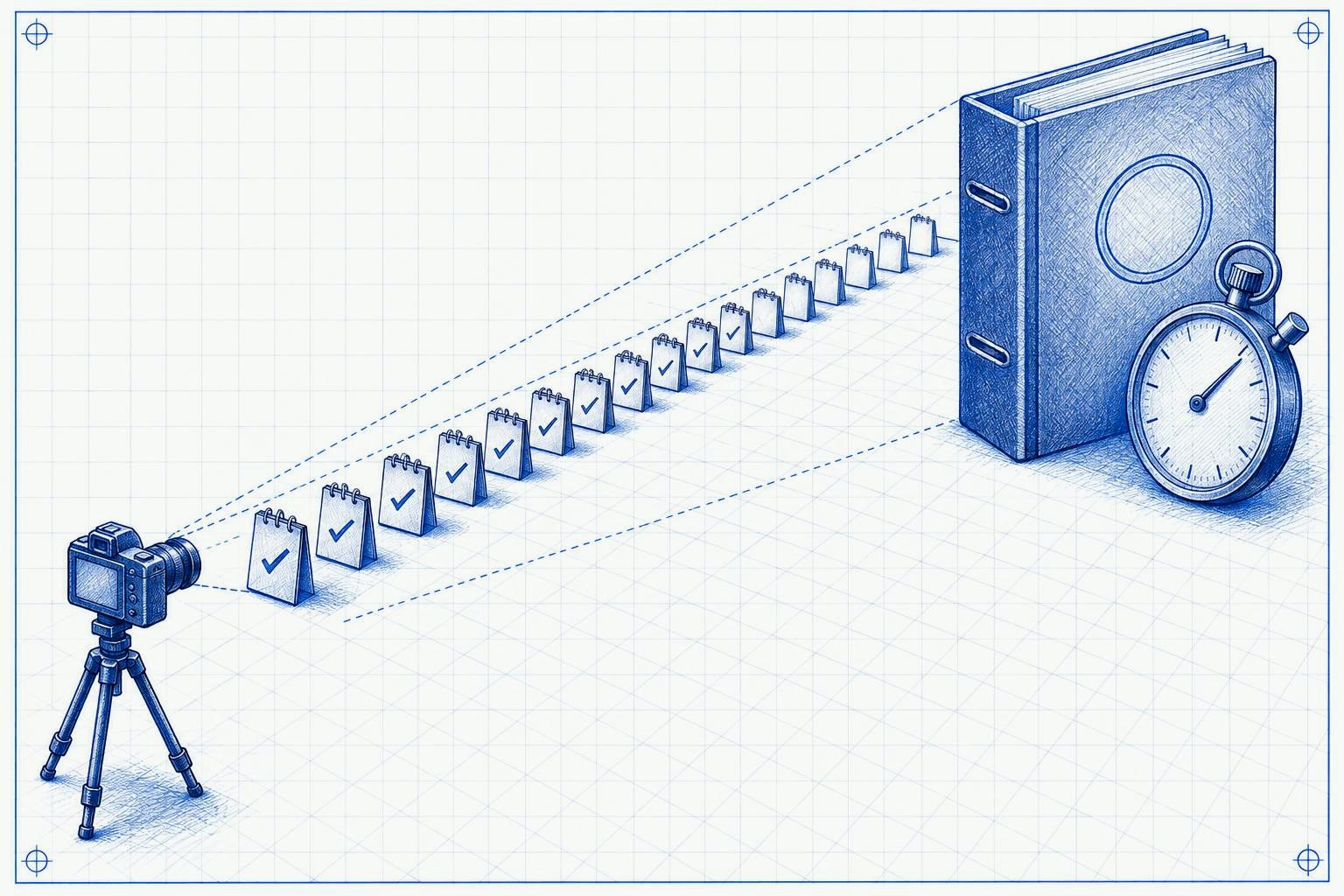
Search for the difference between a SOC 2 Type 1 and a Type 2 and the first page agrees on one sentence: a Type 1 tests whether your controls are designed properly on a single date, and a Type 2 tests whether they operated over a period of months. Most of those pages are written by compliance software vendors and audit firms, and the sentence is correct. Then nearly all of them frame the choice the same way, as light versus thorough, cheaper versus stronger.
Type 1 versus Type 2 isn't a rigor decision. It's a calendar decision. That's my view, not audit doctrine. A Type 2 can't exist until your controls have run for a whole observation window, so the useful question is what date your buyer needs proof by, and whether a window can start, finish and be reported on before then.
What each report says
Both are attestation reports a CPA firm issues under AICPA standards. The difference is the time they cover. A-LIGN, an audit firm, puts it this way: a Type I attests to the design and implementation of controls at a single point in time, and a Type II adds their operating effectiveness over a period, typically 3 to 12 months.
| SOC 2 Type 1 | SOC 2 Type 2 | |
|---|---|---|
| Question it answers | Are these controls designed to meet the criteria? | Did these controls operate consistently across these months? |
| Time it covers | A single date | An observation window, usually 3 to 12 months |
| What the auditor samples | Design and implementation, as of that date | Dated evidence from across the whole window |
| Earliest you can have it | Soon after the controls are in place | After the window ends, plus the time to write the report |
On window length, the published guidance is looser than most people assume. Schneider Downs says there's no precise AICPA requirement for a minimum Type 2 period; that firm accepts three months for a first report and at least six after that. A CPA writing for the Cloud Security Alliance describes periods as usually three to twelve months, with three-month first reports common for new companies. Linford & Co sees 6, 9 or 12 months, with 12 the most common, and a final report generally issued within a month or two after the period ends. Your audit firm decides what it will accept, so ask it early.
The window math
Here's the arithmetic I'd do before talking to anyone about which report to buy:
Earliest Type 2 report date = the day every in-scope control is running and leaving evidence + the observation window + the time to issue the report.
With a three-month first window and one to two months to issue, that's about four to five months from the day your controls actually start. Worked through for a team whose controls are running on December 1, 2026:
| Window | Window ends | Report, roughly |
|---|---|---|
| 3 months | Feb 28, 2027 | April 2027 |
| 6 months | May 31, 2027 | July 2027 |
| 12 months | Nov 30, 2027 | January 2028 |
The dates are just arithmetic on the ranges above, not a promise from any auditor. But they change the conversation. If a buyer's security review closes in February, no amount of effort produces a Type 2 by then. If it closes next summer, you may not need a Type 1 at all.
When a Type 1 earns its fee
Put your deal date next to your earliest Type 2 date and the decision mostly makes itself.
- The buyer needs something before a Type 2 can exist, and will accept a Type 1 meanwhile. Buy the Type 1, and start the Type 2 window the same day, because the Type 1 gets you through this deal without moving your Type 2 date at all.
- The deal can wait for the Type 2. Skip the Type 1 and put the money into starting the window sooner. Neither report is a prerequisite for the other.
- The buyer won't accept a Type 1. Some won't, because a design review says nothing about whether the controls ran. Then the only lever is the window's start date, and the next section is about moving it.
The pattern I'd most want to avoid is treating the Type 1 as a rehearsal and starting the Type 2 window only after it's done. That stacks the two in sequence and adds months to the date you actually care about. Before you decide, ask the buyer directly: "Would a Type 1 now and a Type 2 covering the period through a stated date satisfy your review?" Their answer usually decides it.
What actually delays the window: the by-product test
The window can only start when every in-scope control leaves a dated record, because the auditor can pull a sample from any week of it. So for each control, I'd ask one question: does the evidence appear as a by-product of work people already do, or does someone have to remember to save it?
- By-product evidence is written by the tool as the work happens: a pull request approval in git, a CI pipeline log, an access change recorded by the identity provider, a ticket that moved through its workflow. These controls can start the window today.
- Remember-to-save evidence depends on a person: a screenshot of a quarterly access review, a spreadsheet of offboarded accounts, a note that someone tested a backup restore. These are the controls that turn into exceptions in month seven, when the person who used to save the screenshot was on vacation.
So the fastest route to an earlier Type 2 usually runs through converting remember-to-save controls into by-product controls, so the record exists whether or not anyone remembers it, rather than through more documentation. That's the same idea behind putting audit evidence in git commit trailers and enforcing the push to main in the tool rather than in a policy.
A useful first exercise is to list your in-scope controls in two columns, by-product and remember-to-save, and count the second column. My guess is that count predicts the pain of a first Type 2 better than the choice of report does.
What a buyer actually reads
Once you have a Type 2, the people reviewing it will look at two things before anything else: the dates of the period and the exceptions. A report whose period ended a long time ago tells them less about today, which is why the expectation is a new report every year with no gap between periods. Linford notes reports are expected annually, or more often for shorter periods, so there's no gap, and the Cloud Security Alliance piece warns that customers may question gaps. So in calendar terms a Type 2 behaves less like a one-off project and more like a window that keeps rolling, which is why reviewers check the dates first.
If ISO 27001 is also on the table
SOC 2 and ISO 27001 answer different questions, and I've argued elsewhere that the question in your buyer's questionnaire should decide which you need. If you end up needing both, the by-product test pays twice: the same dated evidence feeds an ISO surveillance audit. For the ISO budget, see pricing the three-year cycle.
Honest limits
The window math uses ranges published by audit firms, not a rule. Your firm may accept a shorter or require a longer first period, and report turnaround varies with your readiness and its workload. The calendar framing and the by-product test are my own way of thinking about the decision, not AICPA guidance. Get your audit firm's view on period length and scope before you plan around any date in this piece.
Frequently asked questions
Is a SOC 2 Type 1 worth it?
It's worth it when a buyer needs proof before a Type 2 could exist and will accept a Type 1 in the meantime. Start the Type 2 observation window the same day. If the deal can wait for a Type 2, or the buyer won't accept a Type 1, put the money into starting the window sooner instead.
How long does a SOC 2 Type 2 take?
Add the observation window to the time it takes to issue the report. Windows usually run 3 to 12 months, and Linford & Co says the report generally follows within a month or two of the period end. With a three-month first window, that's roughly four to five months from the day your controls are running.
Can you skip Type 1 and go straight to Type 2?
Yes. Neither report is a prerequisite for the other. Many companies go straight to a Type 2 when their buyers can wait for it, because a Type 1 run in sequence only pushes the Type 2 date later.
What is the minimum SOC 2 Type 2 observation period?
There's no precise AICPA minimum, according to Schneider Downs. Audit firms set their own: three months is commonly accepted for a first report, and later reports usually cover six to twelve months, with twelve the most common.
What is the difference between SOC 1 and SOC 2?
A SOC 1 report covers controls relevant to your customers' financial reporting. A SOC 2 report covers controls relevant to security, availability, processing integrity, confidentiality and privacy. Both come in Type 1 and Type 2 versions with the same point-in-time versus period distinction.
Sources
- A-LIGN, What's the difference between SOC 2 Type I and Type II?
- Linford & Co, SOC 2 Type 2 reports guide (May 22, 2024)
- Schneider Downs, SOC 2 misconceptions and requirements (Feb 19, 2024)
- Cloud Security Alliance, What should the scope period be for my SOC 2 Type 2 report? (Mar 25, 2024)
- AICPA, SOC 2 Reporting on an Examination of Controls at a Service Organization